If you live with Essential Tremor, alcohol is probably the strangest detail about the condition — a drink quiets your hands in a way that feels almost medical. This Essential Tremor alcohol connection is real, documented, and neurological. This guide explains why it works, why the effect rebounds the next day, and what safer alternatives offer the same relief without the downsides.
Alcohol Really Does Reduce Essential Tremor
If your hand tremors quiet down after a drink, you're not imagining it. Between 50% and 75% of people with Essential Tremor report meaningful tremor reduction after consuming alcohol — the majority, not the exception. Movement disorder neurologists use alcohol responsiveness as a clinical indicator that helps distinguish ET from Parkinson's Disease. So does alcohol help Essential Tremor? Yes. The more important questions are why, and what that means for management.
Why Does Alcohol Reduce Tremors?
If you've searched "why does alcohol reduce tremors," you've probably read dozens of vague answers. The short version: ethanol enhances GABA-A receptor activity in the cerebellum, which strengthens the brain's natural braking system and calms the oscillatory firing that causes Essential Tremor. That's the core of the Essential Tremor alcohol effect. It's not caffeine's opposite, not relaxation, not placebo — it's a specific pharmacological action on the exact neural circuit responsible for the tremor.
The GABA-A Mechanism — Why Alcohol Quiets the Tremors

Essential Tremor is driven by abnormal oscillatory firing in the cerebello-thalamo-cortical circuit. Alcohol is a positive allosteric modulator of GABA-A receptors — specifically the α6β3δ extrasynaptic receptors on cerebellar granule cells — amplifying inhibitory neurotransmission where tremor originates. That's the alcohol and Essential Tremor GABA connection. The effect is dose-dependent: low- to moderate doses reduce tremor, but higher doses reverse the benefit. The alcohol-reduces-hand-tremors mechanism works within a narrow, individual window.
How Alcohol Reduces Hand Tremors: The Mechanism in Plain Terms
The mechanism by which alcohol reduces hand tremors comes down to one thing: amplification of inhibitory signals. Imagine the tremor circuit as a car with a weak brake pedal — the oscillation happens because the brake can't slow the system enough. Alcohol temporarily strengthens the brake. GABA receptors fire more strongly, neural activity quiets, and the hand stabilizes. This is why alcohol helps Essential Tremor patients feel immediate relief — the brake works again, briefly.
The Rebound Effect — Why Tremors Often Get Worse After Alcohol Wears Off
Many patients experience worse tremors 12 to 24 hours after drinking than before — a temporary spike above baseline called rebound excitation. When alcohol amplifies GABA signaling for hours, the brain compensates; as alcohol clears, inhibition drops faster than compensation reverses, so tremor briefly spikes above normal.
Why the Cycle Self-Reinforces
If your morning-after tremor feels worse, that's not disease progression — it's neurological rebound, and it's one of the most reinforcing patterns in Essential Tremor and alcohol self-management.
Essential Tremor and Alcohol Consumption
The question isn't whether Essential Tremor and alcohol consumption are compatible — it's where the line sits. Occasional moderate use (one to two drinks, infrequently) carries low clinical risk for most people with ET. Daily use for tremor relief crosses into dependency territory. The Essential Tremor alcohol pattern becomes problematic when you're timing drinks around tasks, drinking alone to steady your hands, or noticing worse tremors without it. That's when it's time to talk to your neurologist.
The Dependency Trap — Why ET Patients Are at Higher Risk for Alcohol Use Disorder
People with Essential Tremor face roughly 2–3 times higher risk of alcohol use disorder than the general population — not because of weakness, but because alcohol reliably reduces a chronic neurological symptom. The Essential Tremor alcohol abuse pattern emerges when an effective short-term solution is also the only accessible one.
Warning Signs the Pattern Has Shifted
Warning signs that Essential Tremor and alcohol consumption have become reinforcing include needing larger amounts, drinking earlier, and avoiding alcohol-free situations. The NIAAA offers confidential resources.
Recognizing Essential Tremor Alcohol Abuse Before It Takes Hold
Essential Tremor alcohol abuse rarely begins as abuse. It starts as a glass of wine before dinner and slowly expands — earlier in the day, more often, harder to skip. Key markers include: needing more alcohol for the same tremor relief, feeling panic about alcohol-free events, hiding how much you drink, or noticing withdrawal tremors without it. These patterns are neurological, not moral. Catching them early means alternatives are still easy to explore.
What the GABA Mechanism Tells Us About ET Treatment
Understanding the GABA mechanism explains why gabapentin — a GABA analog — works for Essential Tremor, without alcohol's rebound or dose ceiling. Propranolol and primidone target the same oscillation through different pathways.
The Non-Chemical Alternative
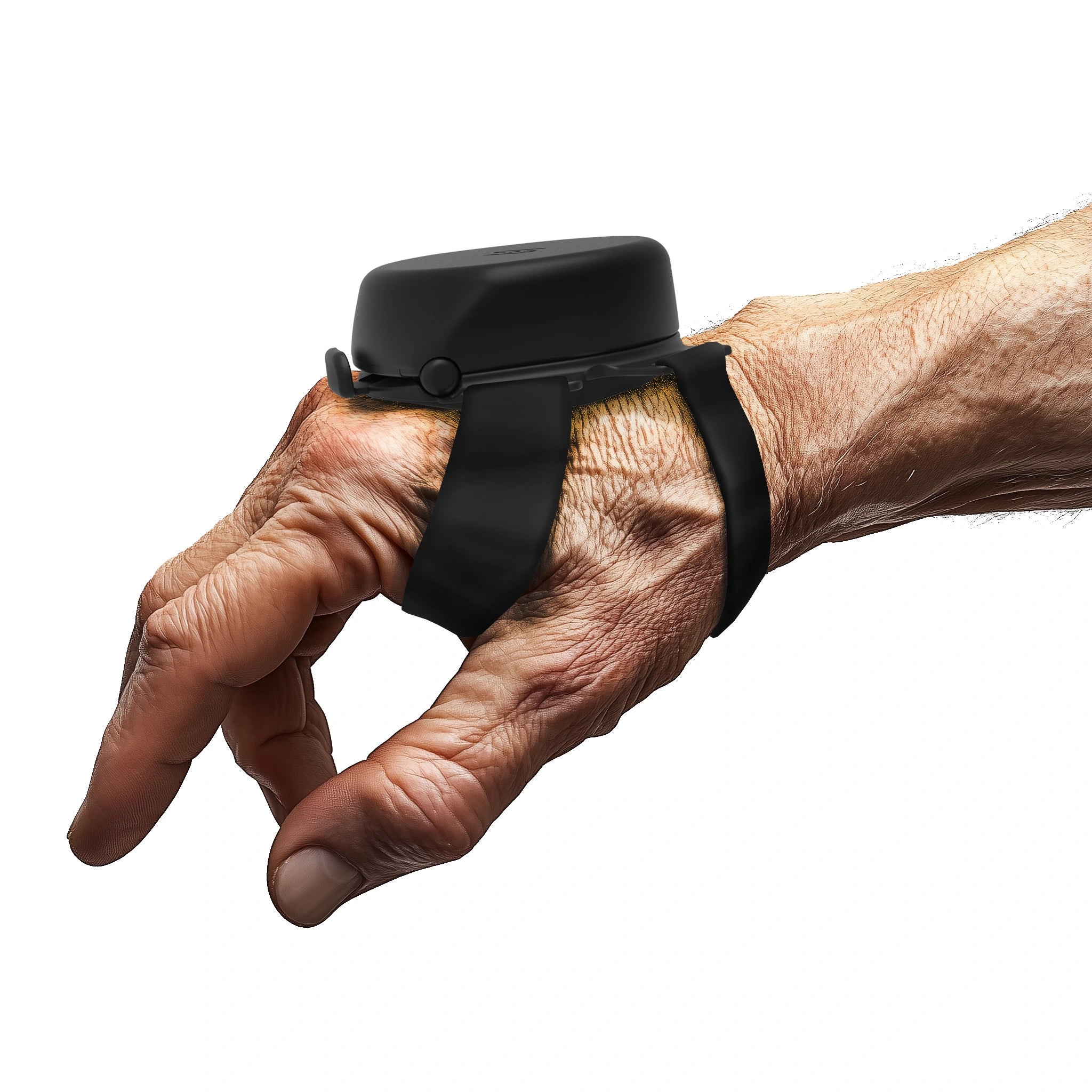
The Steadi-3 uses passive magnetic dampening technology to mechanically absorb tremor motion. Battery-free, FDA Class I registered, and validated in a placebo-controlled study showing improved tremor control in 84% of participants — no dependency risk, no rebound, no systemic side effects.
Alcohol and Essential Tremor GABA Pathway
The link between alcohol and Essential Tremor GABA is useful clinical information. If alcohol reliably calms your tremor, it tells your neurologist that your ET likely responds to GABA-targeting therapy, which narrows treatment options in a helpful way. Gabapentin, which targets the same inhibitory pathway, may produce similar relief without the rebound, dose ceiling, or dependency risk of alcohol. Telling your specialist that "alcohol helps" isn't a confession — it's diagnostic data.
Why the Steadi-3 Works Where Alcohol Can't

The Steadi-3 solves what alcohol can't: sustained tremor relief without chemistry. While the Essential Tremor alcohol effect lasts one to three hours and comes with rebound the next day, the Steadi-3's passive magnetic dampening works continuously for as long as it's worn. No narrow dose window. No dependency trajectory. No morning-after spike. It's the mechanical answer to why alcohol reduces tremors — steadier hands, without touching the nervous system at all.
Conclusion
Why does alcohol reduce tremors? Ethanol amplifies GABA-A receptor activity in the cerebellum, dampening the oscillatory misfiring that drives Essential Tremor. The problem isn't the mechanism — it's the consequences: rebound tremors the day after, a narrow dose window, and elevated risk of alcohol use disorder. The GABA connection points toward better options: GABA-targeting medications like gabapentin, or mechanical stabilization that absorbs tremor without touching the nervous system.