Deep Brain Stimulation for Essential Tremor
Deep brain stimulation for Essential Tremor is an FDA-approved surgical option for patients whose tremor does not respond to medication. This page explains how the procedure works, who qualifies, what to expect, the risks involved, and non-surgical management options worth knowing.

What Is Deep Brain Stimulation and How Does It Work?
Deep brain stimulation involves implanting a thin electrode into the VIM nucleus of the thalamus, the area of the brain linked to the tremor circuit. The electrode connects to a small neurostimulator placed under the skin near the collarbone, which delivers electrical pulses that disrupt faulty tremor signals. FDA-approved for Essential Tremor since 1997, the procedure can address tremors in the hands, arms, head, and voice. Bilateral implants are available but carry a higher risk of speech and balance problems.
Who Is a Candidate for DBS Surgery?
Deep-brain stimulation surgery for Essential Tremor is typically considered when the tremor is disabling and does not respond to medications such as propranolol and primidone. Candidacy requires a confirmed Essential Tremor diagnosis from a movement disorder neurologist, along with cognitive and overall health assessments. Cognitive impairment may disqualify some candidates. DBS is no longer viewed as a last resort; patients can explore it proactively once two or more medications have failed to provide adequate control of daily symptoms.

What to Expect Before, During, and After DBS Surgery
Pre-surgical evaluation includes neurological exams, cognitive testing, and brain imaging to confirm candidacy. The procedure may be performed awake, allowing real-time tremor feedback, or asleep under general anesthesia at centers offering that option. Electrode placement is confirmed during surgery, and the neurostimulator is programmed in follow-up visits. Tremor reduction may appear within days or take several weeks to optimize as settings are refined. Initial programming usually requires multiple clinic visits before results stabilize for daily use.
Benefits and Limitations of DBS for Essential Tremor
Deep brain stimulation surgery for Essential Tremor most significantly reduces hand and arm tremor, with roughly 90% of patients reporting moderate relief. Bilateral procedures further improve head and voice tremor compared with one-sided implants. However, efficacy can decline over the years as the brain habituates to stimulation, a pattern documented in long-term follow-up studies. DBS is a management therapy, not a cure for Essential Tremor. Ongoing programming adjustments and device maintenance are required to sustain meaningful results over time.

Risks and Side Effects of Deep Brain Stimulation Surgery
Surgical risks include infection, bleeding, and rare cases of stroke. Device-related complications can include lead migration, hardware malfunctions, and the need to replace the neurostimulator battery every 3 to 5 years, though rechargeable models are available. Bilateral DBS carries an increased risk of speech, swallowing, and balance problems. Stimulation side effects may include tingling, dizziness, or vision changes; many of these can be reduced through programming adjustments. A neurologist should review individual risk factors before surgery is scheduled.
DBS vs Focused Ultrasound: Comparing Surgical Options
Focused ultrasound, also called MRgFUS, is an incisionless alternative that uses sound waves to create a precise lesion in the thalamus and requires no implant. Unlike focused ultrasound, DBS is adjustable and reversible, while ultrasound creates permanent tissue changes. Focused ultrasound is currently approved only for unilateral treatment, whereas DBS allows bilateral implantation. Both treatments are FDA-approved. The right choice depends on tremor pattern, age, overall health, and personal preference, and should be guided by a movement disorder neurologist.
Managing Tremor Before, During, or After DBS
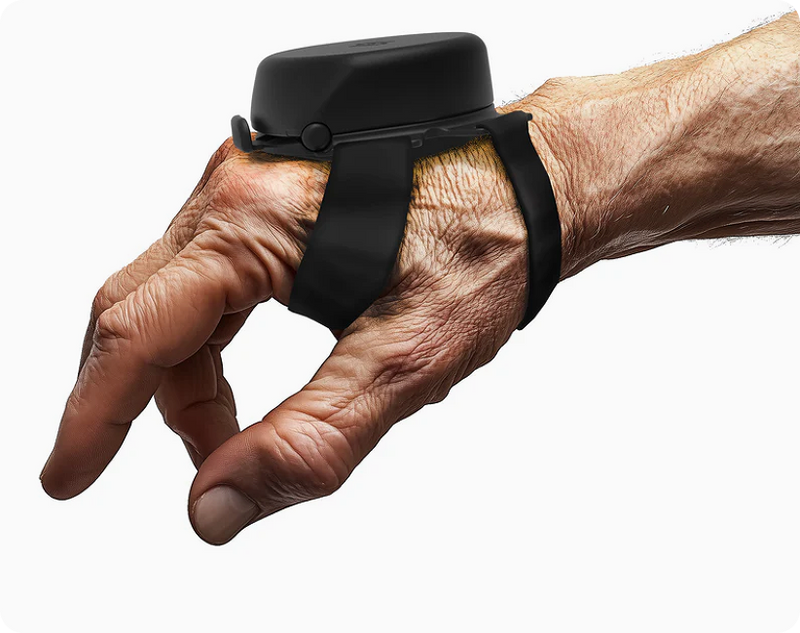
Not every patient with Essential Tremor qualifies for DBS, and some prefer to delay or avoid surgery. Others experience tremor recurrence as stimulation efficacy declines over the years. Wearable assistive devices such as the Steadi-3 tremor glove can support daily independence at any stage, before surgery, during recovery, or long-term. The Steadi-3 is an FDA-registered Class I medical device that uses passive magnetic stabilization and requires no prescription, batteries, or charging. Consult a healthcare provider to determine the appropriate combination of treatments.
Frequently Asked Questions
Is deep brain stimulation a cure for Essential Tremor?
No. Deep brain stimulation is not a cure for Essential Tremor; there is currently no cure for the condition. DBS is a management therapy that reduces tremor severity for many patients, but tremor can return or worsen over time as the brain habituates to stimulation. Medication management and wearable assistive devices remain relevant even after surgery. Patients should maintain realistic expectations and ongoing follow-up with a movement disorder neurologist to adjust programming and overall care as needed.
Who qualifies for deep-brain stimulation for Essential Tremor?
Deep-brain stimulation surgery for Essential Tremor is typically recommended for patients with disabling tremor who have not responded adequately to at least two medications, such as propranolol and primidone. A confirmed diagnosis from a movement-disorder neurologist is required, along with cognitive testing and a general health review. Age alone is not a disqualifier. Bilateral tremor that affects daily tasks such as eating, writing, and drinking often drives candidacy. A neurologist referral is the appropriate first step toward evaluation.
How effective is DBS for hand tremor in Essential Tremor?
DBS for Essential Tremor is most effective for hand and arm tremor, the primary symptom for most patients. Around 90% of patients report a moderate-to-significant reduction in hand tremor following implantation in the VIM nucleus. Head and voice tremor also improve, particularly with bilateral procedures. Efficacy is strongest in the first years after surgery; some patients experience a gradual decline over time. Results vary by individual and depend on accurate electrode placement and ongoing programming adjustments made by the clinical team.
What is the difference between DBS and focused ultrasound for Essential Tremor?
DBS requires brain surgery to implant an electrode and a neurostimulator that delivers ongoing electrical pulses. Focused ultrasound, or MRgFUS, is incisionless and uses concentrated sound waves to create a small permanent lesion in the thalamus. DBS settings are adjustable and reversible, while focused ultrasound results are permanent. Focused ultrasound is currently approved for only one side of the brain, so DBS is generally preferred when bilateral treatment is needed. Both are FDA-approved and performed by specialized neurosurgical teams.
Are there non-surgical options for Essential Tremor when DBS is not appropriate?
Yes. Medications such as propranolol and primidone remain the first-line standard for Essential Tremor. When medications provide insufficient control and surgery is not appropriate, wearable assistive devices can support daily tasks such as eating, writing, and using a phone. The Steadi-3 is an FDA-registered Class I medical device that uses passive magnetic stabilization to reduce hand tremor, with no prescription, batteries, or charging required. A healthcare provider can help determine the right combination of treatments for your situation.