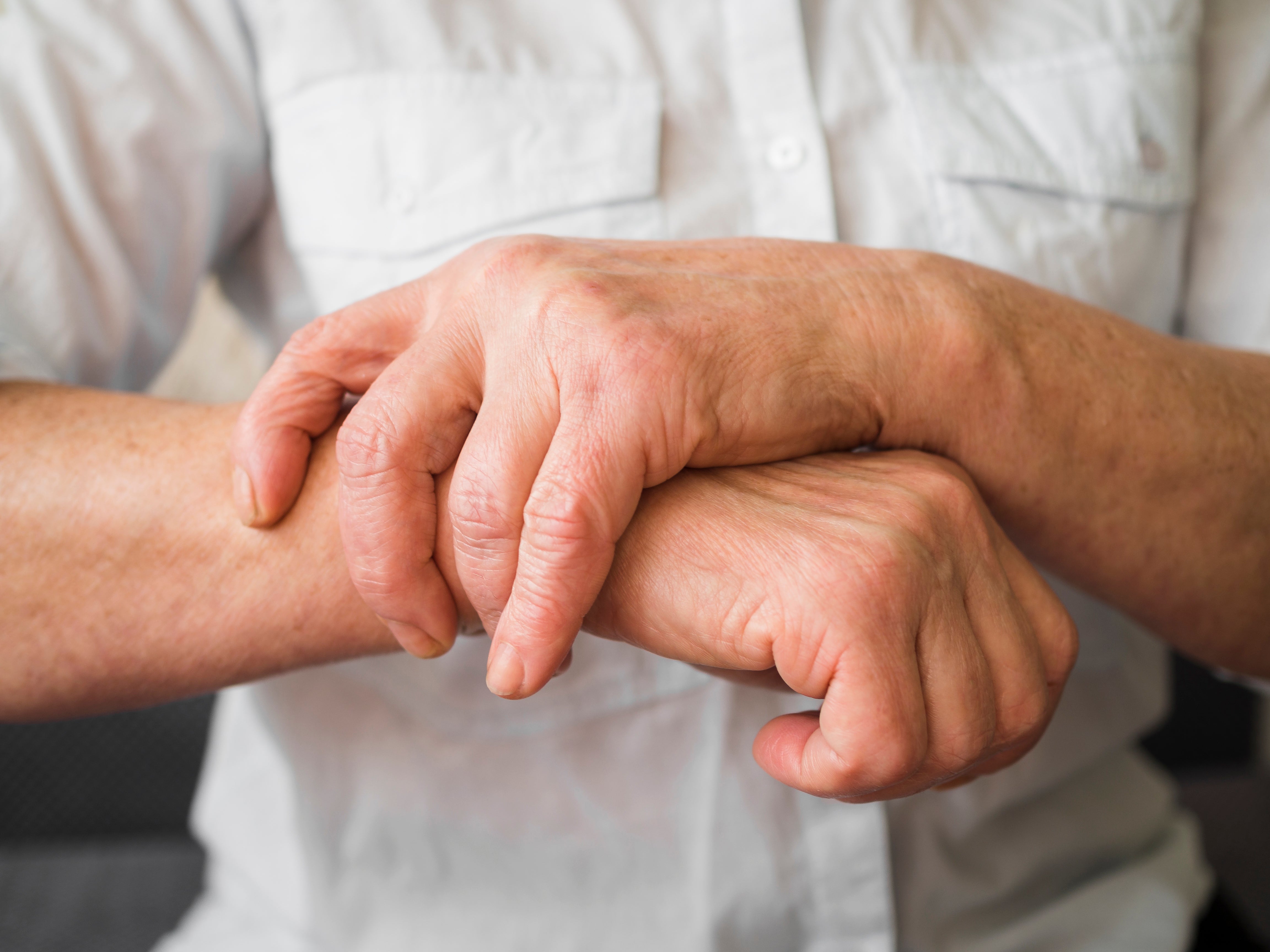
Finger twitching can come from everyday activities like texting or typing, or from stress, excess caffeine, fatigue, or a vitamin deficiency. Medically it's a fasciculation — a small, involuntary muscle contraction — and it's usually harmless, often appearing after repetitive tasks or long work sessions. In rare cases, persistent twitching can point to a neurological condition such as Amyotrophic Lateral Sclerosis (ALS), which is why twitching that won't settle, spreads, or comes with weakness should be evaluated. The quickest way to tell a twitch from a tremor: twitches are short and irregular, while tremors are rhythmic and continuous (NINDS, Tremor).
A tremor is a rhythmic, shaking movement that can affect the hands, arms, or voice. Essential Tremor is the most prevalent movement disorder and most often affects the hands (Haubenberger & Hallett, New England Journal of Medicine, 2018); Parkinson's is another common cause. Unlike a twitch, a tremor involves larger muscle groups and persists over time. If finger twitching seems to evolve into a full-hand shake, that's worth a specialist's assessment — see our guide to what defines a hand tremor.
Twitching at rest can be unsettling. Unlike an occasional twitch from overexertion or caffeine, resting twitches can reflect an imbalance in neurotransmitters, nerve irritation, sleep deprivation, certain medications, or deficiencies in magnesium and vitamin E. If the symptom persists, a healthcare professional can identify the trigger and distinguish a twitch from an early tremor.
Genetics plays a role in tremor, but lifestyle and environment shape its severity. Certain toxins, long-term use of specific medications, and chronic stress can worsen tremor, and alcohol and nicotine have been linked to more tremor activity in some people. On the other side, meditation, paced breathing, and regular activity can help reduce intensity. Even heavy typing can provoke finger twitching — noting when yours appears (at rest vs during repetitive motion) helps you track triggers and adjust.
Tremor care keeps advancing — from deep brain stimulation and MRI-guided focused ultrasound for severe cases to medications targeting the pathways behind tremor. Wearable technology has advanced too: FDA-registered tremor gloves now offer mechanical stabilization for daily tasks without drugs or surgery.
When shaking — not twitching — is the problem, a wearable can steady the hand. The Steadi-3 Plus is an FDA-registered Class I medical device that stabilises the hand with a passive magnetic vibration absorber (tuned mass damping), countering tremor mechanically in real time, with no batteries or charging. The clinically validated figures back it up: 84% of wearers saw improved tremor control over no device, and 70% over a placebo glove, in a placebo-controlled study (Steadiwear, Steadi-3 Plus validation study). It doesn't treat a twitch or cure a tremor — it steadies the hand for writing, eating, and delicate tasks, whether the cause is Essential Tremor or Parkinson's.
Lightweight and battery-free, FDA-registered tremor gloves are a practical option to raise with your clinician once a twitch has clearly become a persistent tremor.