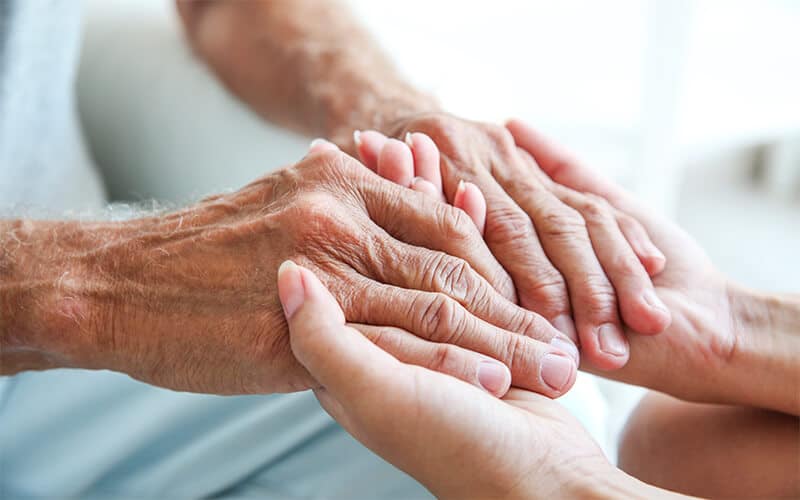
Anxiety tremors occur when the body's fight-or-flight response fires. Adrenaline floods the system to prepare you to confront or flee a perceived threat, and one side effect is trembling — most often felt in the hands. Physiologically, the stress hormones amplify the faint physiologic tremor everyone has into something visible, a pattern clinicians call enhanced physiologic tremor (NINDS, Tremor). It's a normal reaction, but for some people it's pronounced and disruptive enough to warrant attention.
Anxiety tremors are typically transient and track your stress level — they ease as you calm down. Essential Tremor is a chronic neurological condition that produces shaking during movement regardless of mood, although stress reliably makes it worse too (Haubenberger & Hallett, New England Journal of Medicine, 2018). Telling them apart matters because the management differs: a stress tremor responds to calming the nervous system, while ET needs its own treatment. For how clinicians classify them, see what defines a hand tremor.
Occupational therapy is one of the most practical supports — not just managing symptoms but rebuilding confidence with daily tasks. Therapists tailor exercises for coordination, strength, and dexterity, and recommend adaptive tools matched to your routine. For desk and computer work specifically, that often means weighted pens, a stabilizing mouse, and keyboard pads that keep work precise and productive despite shaky hands.
Living with visible hand tremor is an emotional journey as much as a physical one. When nervous shaking is noticed in public — at a meal, a meeting, or a gathering — the instinct is often to decline the next invitation rather than risk it. This social withdrawal is common and understandable, not a personal failing. Staying engaged, even in small ways, supports both control and confidence, and spotting the pattern early makes it easier to break.
Under stress, the sympathetic nervous system releases adrenaline and related hormones, raising muscle activity and heart rate and, in the process, amplifying tremor. This is why caffeine, fatigue, and anxiety — all of which heighten that same arousal — reliably make shaking worse. Understanding the mechanism points to the fix: anything that lowers sympathetic arousal (slow breathing, sleep, reducing stimulants) tends to reduce the shake.
Beyond tools and therapy, everyday changes help: stress-management techniques like mindfulness and paced breathing, better sleep, limiting caffeine and alcohol, and regular physical activity all reduce how often and how strongly stress tremors appear.
When stress sets the hands shaking — at a meal, a meeting, or signing something in public — a wearable can steady them in the moment. The Steadi-3 Plus is an FDA-registered Class I medical device that counters tremor mechanically with a passive magnetic vibration absorber (tuned mass damping), with no electronics or batteries. For the shaking itself, the trial is specific: in a placebo-controlled study, improvement in tremor control reached 84% of wearers over no device and 70% over a placebo glove (Steadiwear, Steadi-3 Plus validation study). It doesn't treat the anxiety or cure a tremor — it steadies the hand, which for many people also eases the self-consciousness that fuels the stress-shaking cycle.
Used alongside stress-management techniques and, where relevant, an occupational therapist's adaptations, a hand tremor device addresses the physical side while you work on the rest.