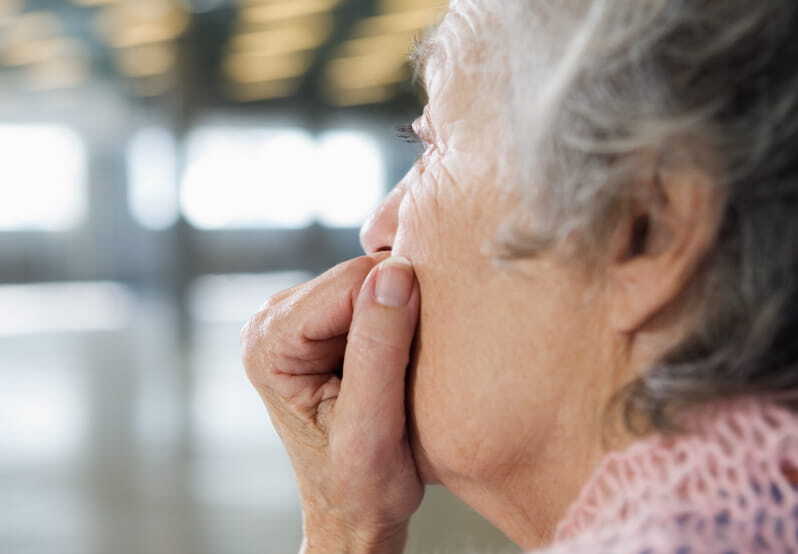
A facial tremor is an involuntary, rhythmic movement of the muscles of the face. It can range from subtle to pronounced and is often most noticeable during specific activities — talking, eating, or holding an expression. The rhythmic, sustained quality is what sets it apart from a brief facial twitch, and it points toward a tremor disorder rather than a one-off muscle spasm (NINDS, Tremor).
Several conditions can produce a tremor of the face:
- Essential Tremor — the most common tremor disorder, an action tremor that can involve the face and voice as well as the hands (Haubenberger & Hallett, New England Journal of Medicine, 2018).
- Parkinson's disease — its tremor can extend to the face, typically at rest, and may affect the lips, chin, or jaw.
- Multiple sclerosis and other neurological conditions — disruptions in nerve signalling can affect facial muscle control.
It's worth separating a facial tremor from facial twitching. Twitching in adults is often benign — fatigue, stress, or too much caffeine can trigger brief spasms — but it can also come from hemifacial spasm, Bell's palsy, certain medications, or electrolyte imbalances. Those are nerve or muscle issues rather than tremor disorders, so persistent or worsening twitching deserves its own evaluation.
Diagnosing a facial tremor starts with a thorough clinical assessment: a detailed medical history and a physical and neurological examination. In some cases a doctor will order neuroimaging, such as an MRI or CT scan, to rule out underlying structural causes. Because the treatment depends entirely on the cause, pinning down the diagnosis is the essential first step.
Treatment is matched to the underlying condition:
- Medication — depending on the cause, beta-blockers, anticonvulsants, or targeted Botox injections may help reduce the tremor.
- Surgery — in severe cases that don't respond to medication, deep brain stimulation (DBS) may be considered; it uses implanted electrodes to regulate the abnormal signals behind the tremor.
- Lifestyle measures — stress reduction, adequate sleep, and limiting stimulants like caffeine and nicotine can ease tremor that's made worse by those triggers.
See a healthcare professional if a facial tremor is persistent, worsening, or affecting daily life, so the cause can be identified and treated. Take extra care with sudden, uncontrollable shaking — especially in older adults — which warrants prompt medical attention, as it can reflect anything from medication effects and metabolic problems to a neurological emergency. A clinician can examine you, identify the cause, and recommend the right management.
One honest caveat belongs here: the Steadi-3 Plus is a glove, so it does nothing for a tremor of the face — the facial side is handled by the medication, Botox, and care described above. Its relevance is indirect but real, because Essential Tremor and Parkinson's rarely stop at the face; the hands are usually involved too. Mechanically, the device works through a passive magnetic vibration absorber (tuned mass damping) rather than electronics or batteries, and it is an FDA-registered Class I medical device. A placebo-controlled study put numbers to its effect on hand tremor: tremor control improved for 84% of wearers over no device, and for 70% over a placebo glove (Steadiwear, Steadi-3 Plus validation study). It neither treats nor cures the tremor, and it leaves the face untouched — it simply makes the hand steadier for everyday tasks such as eating, writing, and holding a cup.
If your Essential Tremor or Parkinson's also makes your hands shake, a tremor-steadying glove can help with daily tasks, alongside the care that addresses the facial tremor.