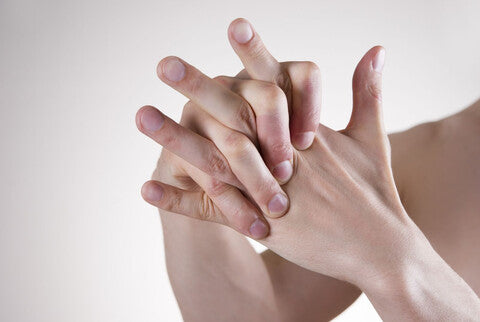
Anxiety is a feeling of unease, fear, or dread that ranges from mild to severe and often brings physical symptoms — a faster heartbeat, sweating, and trembling hands. The reason it causes shaking is the body's fight-or-flight response: under stress, adrenaline (epinephrine) and norepinephrine are released, raising heart rate, blood pressure, and muscle activity to prepare for a perceived threat. That heightened muscle activity is what sets the hands trembling, whether the trigger is genuine danger or simply stage fright before a presentation.
For someone who already has Essential Tremor, anxiety isn't the root cause — but it can clearly intensify the shaking. The same adrenaline that drives the stress response amplifies the tremor already present, which is why ET so often looks worse in anxious moments (Cleveland Clinic, Essential Tremor; Shanker, BMJ, 2019).
It commonly works the other way too. A tremor that's visible to others can make social situations stressful — a meal, a signature, a handshake — and some people start to withdraw to avoid being noticed. That avoidance can deepen isolation, and the anticipatory worry can make the next episode of shaking worse. People with Essential Tremor have higher rates of anxiety, including social anxiety, than the general population — a common, well-documented pattern, not a weakness. Naming the cycle is the first step to interrupting it.
Almost anything can set off anxiety, from a short-term stressor like running late to longer-term worries. With Essential Tremor specifically, the worry often centres on the condition itself:
- Concern about whether treatment is working, or whether symptoms will worsen over time.
- Self-consciousness about how the tremor looks to others in public.
- Stress around tasks that have become harder — eating, holding a cup, or fine work like threading a needle.
Recognising your own triggers makes them easier to plan for and to raise with a clinician.
Because the two feed each other, the most effective approaches work on both at once:
Therapy and medical support
Talk therapy — especially cognitive behavioural therapy (CBT) — is one of the most effective tools for the anxiety side, helping you identify triggers and return to activities you've been avoiding. A doctor can also advise whether medication is appropriate; some options used for anxiety can help tremor too, but that's a decision to make with your prescriber, never on your own.
Exercise
Regular physical activity relieves stress, lifts mood, and releases endorphins that help you feel calmer — all of which lower the arousal that amplifies tremor.
Limit caffeine, alcohol, and nicotine
Caffeine and nicotine can worsen both anxiety and Essential Tremor, and alcohol and sedatives complicate things in their own ways. Cutting back — especially before stressful events — is a low-risk experiment worth trying.
Relaxation techniques
Progressive muscle relaxation (tensing and releasing muscle groups in turn), paced breathing, and mindfulness all calm the nervous system and can reduce shaking in the moment.
See a healthcare professional if tremor is persistent or worsening, or if anxiety is hard to manage on your own — and remember that a persistent tremor during movement can point to Essential Tremor rather than stress alone. Because anxiety-related trembling and Essential Tremor can look similar and can coexist, an assessment is the way to an accurate diagnosis and the right plan, rather than assuming the cause.
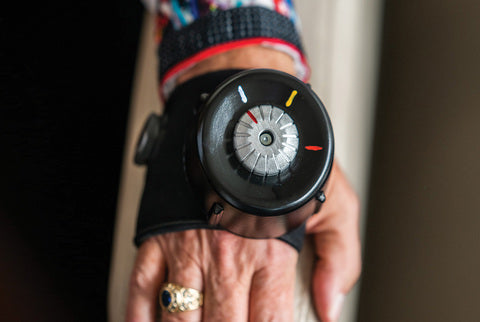
Since a visible tremor can be what fuels the self-consciousness in the first place, steadying the hand can take some pressure off the whole loop. The Steadi-3 Plus is an FDA-registered Class I medical device that steadies the hand with a passive magnetic vibration absorber (tuned mass damping), with no electronics or batteries. When the glove was tested against a placebo, it steadied the hand better than no device for 84% of users, and better than a sham glove for 70% (Steadiwear, Steadi-3 Plus validation study). It doesn't treat anxiety or cure the tremor — but by making the shake less visible in the moments that matter, it can ease the embarrassment that feeds the stress.
Used alongside therapy and relaxation techniques, a glove for shaky hands addresses the physical shake while you work on the rest.